The city can't be everywhere. Neighbors can.
Turn a dirty alley into a shared job — funded by the shop in front, done by the neighbor next door.
It's one block off, in the alley nobody owns.
Ten minutes between errands. Today the only option is to file a complaint and wait for a crew.
A clean frontage is worth paying for. Today there's nothing to buy short of a cleaning contract.
A bounty connects them directly. A shop posts it, a neighbor claims it, unlocks a grabber from a bin on the street, and gets paid. The city keeps the part that's genuinely dangerous.
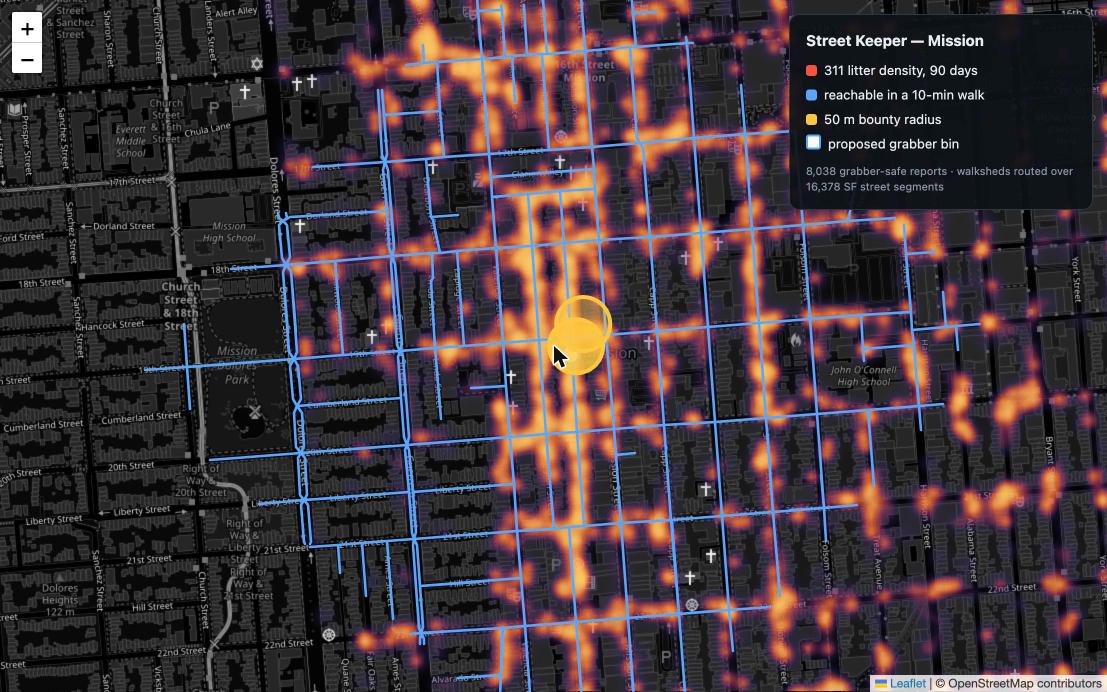
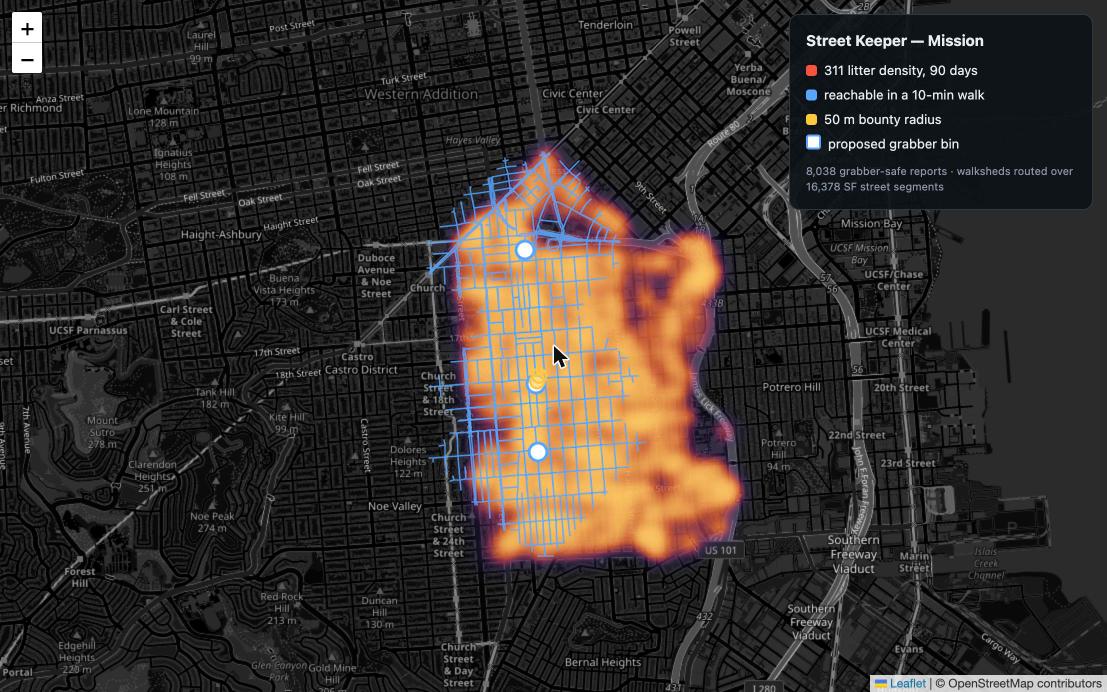
Where a bin goes is a 10-minute walk along the street grid. Where a bounty sits is a 50-metre circle — your frontage and next door.
geo_distance + geotile_grid on Elastic Serverless 9.7 · 10,371 live 311 reports · ~300 ms from SF to us-east4 · walksheds routed on 16,378 street segments
We ran Mistral vision over 180 of the city's own 311 photos. It agreed with SF's labels 60% of the time — and when we looked at why, 17 of 20 disagreements had nothing hazardous visible in the photo at all.
Urine doesn't photograph.
What's safe to send a neighbor to. 58% grabber-safe; 19% hazard and 21% bulky never reach the board.
Confirms the before/after cleanup, and can pull a bounty it can never create.
Street Keeper gives them the tool and the reason.
It runs anywhere with open complaint data and a business registry. Tenderloin and SoMa are a re-filter, not a rebuild.
The ask: one pilot block, one merchant association, one city data contact.
Bins with grabbers are the only physical infrastructure. Everything else is the phone. The engineering of the bin isn't the point of tonight — it's the concept to develop.
Alleys in blue, corridors in grey · grabber-safe reports, 90 days, VIRTUAL addresses excluded
It tracks phone ownership, language, housing tenure, and whether people believe the city turns up. A quiet block may be clean — or may have given up calling.
So complaint data places the heat layer. It never alone places a bounty.